
3 Success = Precision + Protocol + Patient Selection

Success can be said to be a secret, based on talent, luck or timing. However, when it comes to high-risk areas such as medical, scientific or performance fields, success is not something that happens by chance, but is based on this formula:
Success = Precision + Protocol + Patient Selection
Each one of these plays an immense role. Take away one piece of the puzzle, and the results are no longer predictable. Put all three together, and the results will be predictable, measurable, and scalable.
Precision doing the right thing right Precision is the route to excellence. Precision, in general, refers to something having been accurately prepared, has concerned attention with a detail in its construction or manufacture, and has been executed properly. In a clinical or technical environment, precision means variation elimination or inaccuracy at all junctions.
Precision starts with knowledge: knowing what to know about the anatomy, data, equipment, and technique. But the precision stops there. It also requires discipline. It is not necessary that two people with equal knowledge get equal success. Those with greater accuracy will do so.
- In practice, precision is required:
- Accurate assessment and diagnosis
- Take time to plan before acting
- Effective execution, no cutting corners
Precision reduces complications, increases efficiency and builds trust. The difference between expecting a good result and planning for a good result is accuracy.
Precision emphasizes the how aspect, while protocol emphasizes the when and why. Protocols are formal systems of decision making, guided by evidence, to control certain actions. An effective protocol elevates individual skills to the level of group credibility. It promotes the standardized application of best practices, regardless of the practitioner of the skill and the time of execution. Scaling success requires this.
Protocol: Achieving Repeatable Excellence
Another advantage of the protocol is the elimination of cognitive overload. This is because professionals no longer need to rely on memory or create as the situation demands.
Effective Protocol:
- are evidence-based and results-driven
- are well documented and easily understandable
- Allows flexibility when personal judgment must be exercised
It is important that the protocols evolve. Frequent updates will ensure that they comply with new evidence and technology.
The use of precision in a solid protocol improves the safety as well as predictability and efficiency of the results obtained.
patient selection
Patient Selection: Selecting the Right Candidates
When Precision and protocol can never be successful unless they are applied to the right individuals. Here patient selection plays a very important role.
Every patient is different. Interventions do not always work for every patient. There are differences based on their physiology, lifestyle, expectations as well as various risk factors. Selecting patients for intervention will help ensure benefit over risk.
Therefore, good selection of patients is less a matter of inclusion than of alignment. This includes honest assessment, open communication and decision making. Patient satisfaction rates are higher, and complication rates are lower when one has a clear understanding with their patients of what the treatment can and cannot do.
Key elements of effective patient selection include:
- Comprehensive Assessment and Screening
- Understanding patient needs and expectations
- Identification of contraindications and risk factors
Even the most precise technology, with a well-designed protocol, can fail when patient selection is ignored. On the contrary, when proper attention is paid to this issue, outcomes improve radically.
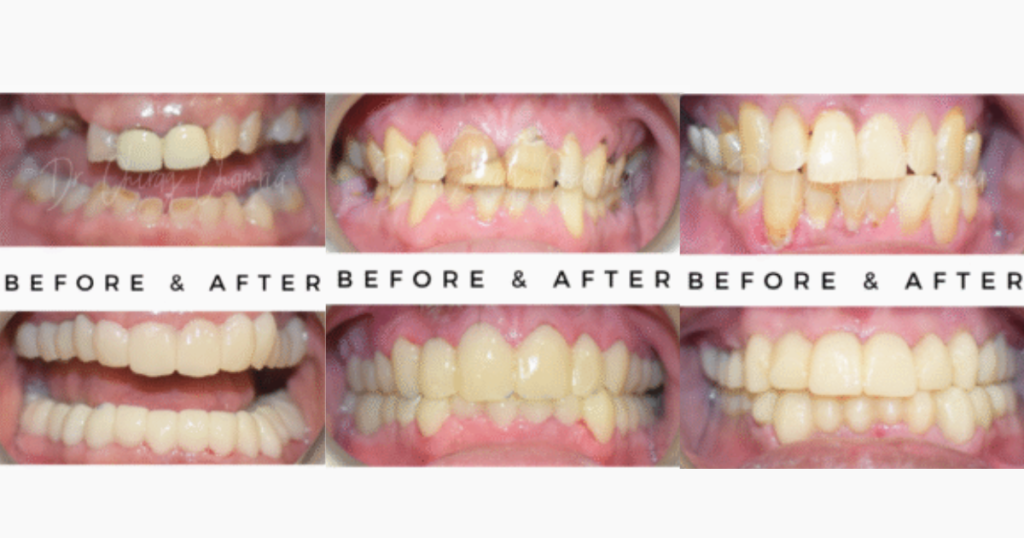
Power of Integration
True success arises from the intersection of precision, protocol, and patient selection. None of these operate in a vacuum; They support each other.
- Protocols lacking precision lead to inconsistency.
- Protocol without precision breeds rigidity.
Both, without proper selection of patients, lead to preventable failure. All of them together provide a system that is reliable, ethical and result oriented. With this integrated approach, success changes from operator-dependent to system-dependent. This provides teams with the ability to continuously learn from data, improve, and create high-quality results again and again.
Conclusion
“Success is not an accident – it is a design.” This means that to achieve successful and sustainable results as care providers require careful patient selection, as well as dedication to precise and strict protocols.
- Be it health sector or research or other walks of life, the following formula is important:
- Finding the equation for a successful outcome
- A successful result equals precision plus
“When these three things are respected, excellence will be the norm, not the exception.”